
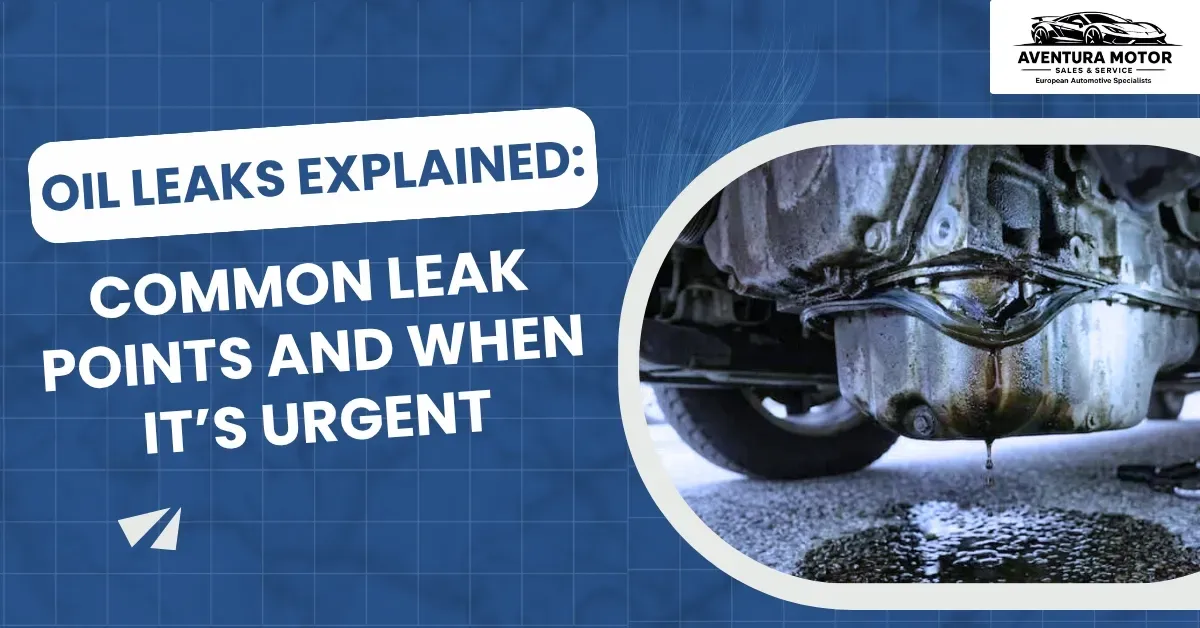
People may ignore small oil leaks, leading to serious engine trouble. Common leak points include valve cover gaskets, oil pans, drain plugs, and other seals that wear down over time. If you notice dark spots under your car after parking, a burning smell while driving, or oil levels dropping between services, it is best to have it checked. Scheduling an Oil Change Service in Aventura, FL can help catch leaks, protect your engine, and prevent a minor issue from turning into a costly repair.
Key Takeaways
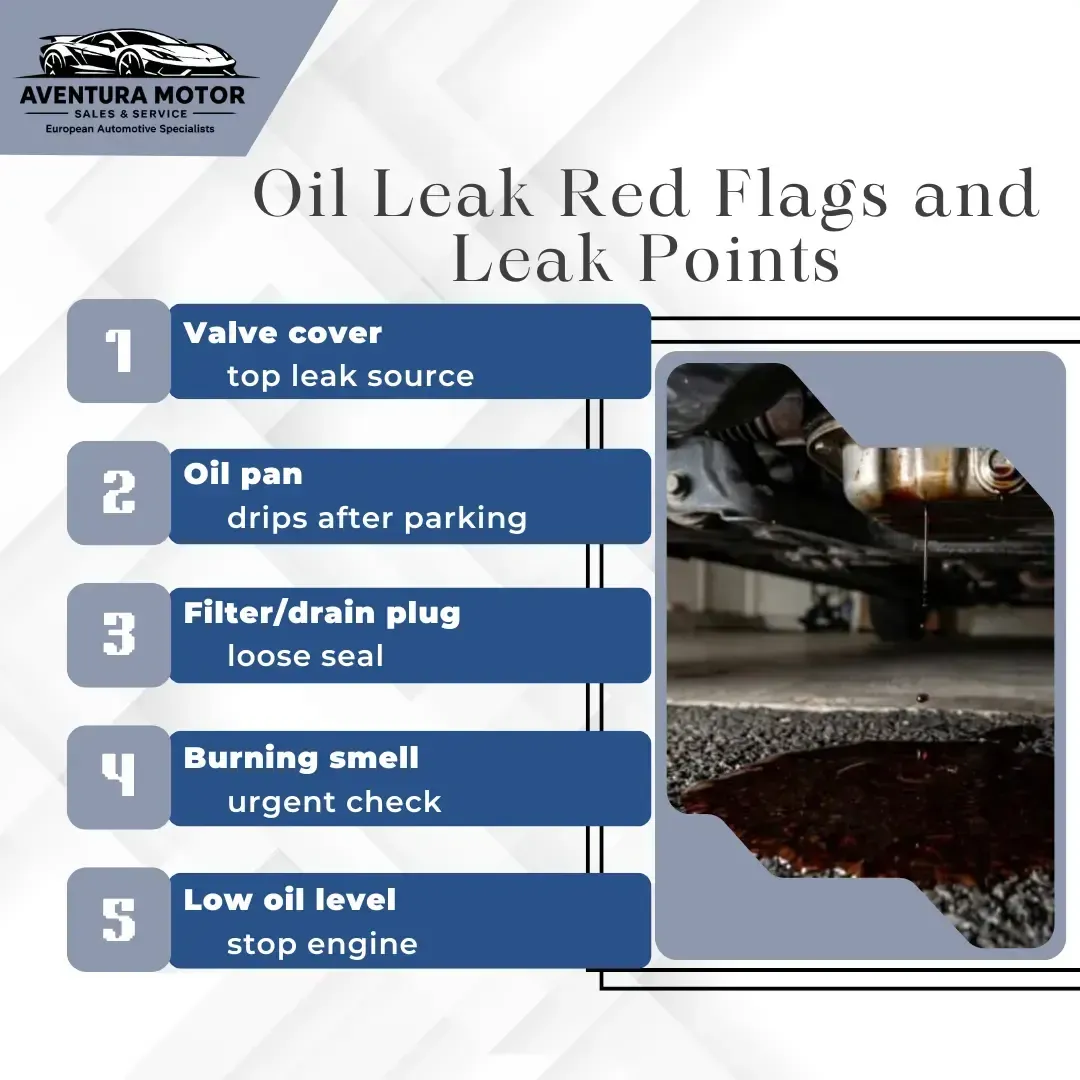
- Common oil leak locations include valve cover gaskets, oil pans, drain plugs, and oil filter housings, especially in European vehicles.
- Signs of oil leaks are burning smells, low oil level warnings, and dark spots or drips around the engine.
- Small oil leaks can escalate, leading to larger puddles and potential damage to exhaust and brake components.
- Ignoring oil leaks can cause costly repairs, engine overheating, and decreased fuel efficiency over time.
- Promptly schedule professional inspections and repairs to maintain vehicle performance and prevent further damage.
Common Car Oil Leak Locations Drivers Should Know
When it comes to oil leaks, knowing where to look can save you time and money. Common culprits include valve cover gaskets, oil pans, and drain plugs. If you drive a European vehicle, always monitor the oil filter housings and seals, too.
Valve Cover Gaskets, Oil Pans, and Drain Plugs
Oil leaks can often be traced back to a few common culprits, such as valve cover gaskets, oil pans, and drain plugs. Knowing these common car oil leak locations can save you time and money. Here are some key points to watch for:
- Valve Cover Gaskets: These can wear out, leading to leaks and engine oil leak symptoms like smoke or burning smells.
- Oil Pans: Damage or improper sealing can cause significant leaks, especially if you notice puddles under your car.
- Drain Plugs: A loose or damaged drain plug can lead to rapid oil loss, raising the question of when is an oil leak serious.
If you notice any of these signs, it is best to get your vehicle checked soon!
Oil Filter Housings and Seals on European Vehicles
Though often overlooked, oil filter housings and seals on European vehicles can be significant sources of oil leaks. If you notice an oil leak under your car when parked, it might be coming from these areas. Over time, seals can wear out or become damaged, leading to leaks that not only affect performance but can also cause more serious engine issues. Regular inspections can help catch these problems as soon as possible. If you suspect an oil leak, don’t hesitate to seek professional help. For reliable European car oil leak repair in Aventura, Florida, Aventura Motor Sales & Service is a great option. Their experienced team can identify and fix oil filter housing issues, ensuring your vehicle runs smoothly and safely.
Engine Oil Leak Symptoms That Should Get Your Attention
If you notice burning oil smells or smoke coming from under the hood, it is time to pay attention. Low oil level warnings or the need for frequent top-offs can signal a leak, too. Watch for dark spots, drips, or oil streaks around the engine, as these signs should not be ignored.
Burning Oil Smells or Smoke From Under the Hood
When you notice burning oil smells or see smoke rising from under the hood, it is crucial to take immediate action. Ignoring these signs can lead to serious engine damage. Here are three steps you should follow:
- Pull Over Safely: If you are driving, find a safe spot to pull over and turn off the engine. This prevents further damage.
- Inspect the Area: Wait for the smoke to settle, then pop the hood and look for signs of oil leaks or burnt oil. Be cautious, as engine parts can be hot.
- Call for Help: Contact a trusted mechanic or roadside assistance. Someone should check out your vehicle before you attempt to drive it.
Taking these steps can save you from costly repairs down the road.
Low Oil Level Warnings or Frequent Top-Offs
Burning oil smells and smoke can signal serious issues, but low oil level warnings or the need for frequent top-offs are just as concerning. If you are constantly adding oil, something’s not right. This could indicate a leak, excessive consumption, or internal engine problems. Ignoring these signs might lead to more severe damage, skyrocketing repair costs, and even unsafe driving conditions.
Make it a habit to monitor your oil levels and check for any unusual drops. Regularly monitor your dipstick and stay on top of maintenance to catch potential issues before they escalate. If you notice low oil levels frequently, it is time to consult a trusted mechanic. Don’t let small problems turn into major headaches—address them promptly!
Dark Spots, Drips, or Oil Streaks Around the Engine
Dark spots, drips, or oil streaks around your engine can be signs of a serious oil leak that shouldn't be ignored. These symptoms often indicate that oil is escaping from somewhere, and addressing it promptly is essential to prevent further damage. Here are a few key things to take into account:
- Source Identification: Check for leaks near the oil pan, valve cover, or oil filter—common culprits.
- Fluid Consistency: Is the fluid thick and black, or thinner and amber? This can help pinpoint the issue.
- Engine Performance: Notice any changes in performance, like unusual noises or warning lights? That is your cue to take action.
Don’t wait; consult a professional to keep your engine healthy!
What an Oil Leak Under Car When Parked Can Mean
If you notice a puddle of oil under your parked car, it is important to identify what type of fluid it is. Fresh oil has a distinct smell and texture that sets it apart from other leaks, like coolant or transmission fluid. Even small leaks can spread fast, leading to bigger issues if not addressed right away.
How to Tell Fresh Oil From Other Vehicle Fluids
When you notice a fluid leak under your car after parking, it is essential to identify whether it is fresh oil or another type of fluid. Fresh oil typically has a distinct look and feel. Here are three ways to tell:
- Color: Fresh oil usually appears amber or light brown. If it is black or dark brown, it might be used oil or another fluid.
- Texture: Fresh oil feels slippery and smooth. If the fluid feels sticky or has a thicker consistency, it might be transmission fluid or coolant.
- Smell: Fresh oil has a mild, oily scent. If you detect a sweet or burnt odor, it could indicate coolant or a different leak.
Identifying the type of fluid can help you take the right steps to address the issue.
Why Small Leaks Can Spread Across the Undercarriage
Although you might think a small oil leak is nothing to worry about, it can spread fast across your car's undercarriage. Even minor drips can accumulate and create larger puddles, leading to potential damage. The oil can be carried by wind or road debris, spreading it further along various components. This can affect parts like your exhaust system, brakes, and even electrical wiring, posing safety risks. Additionally, the oil can attract dirt and grime, which can cause corrosion over time. If you notice a leak, don’t ignore it. Addressing it right away can save you from expensive repairs down the line. Regular inspections and maintenance are essential for keeping your vehicle safe and efficient.
When Is an Oil Leak Serious?
Some oil leaks are more serious than others. If you notice a leak near hot engine or exhaust components, it is essential to pay attention, as this could lead to potential fire hazards. Additionally, if you are losing oil that affects your engine's protection and performance, it is time to get it checked out.
Leaks Near Hot Engine or Exhaust Components
Oil leaks near hot engine or exhaust components can pose serious risks, especially if they go unaddressed. These areas can ignite flammable fluids, leading to fire hazards or extensive engine damage. If you notice a leak in these regions, consider these essential factors:
- Temperature Risks: Oil can catch fire when it drips onto hot surfaces, creating a dangerous situation.
- Performance Issues: Leaks in these areas can lead to decreased engine performance and overheating, causing further complications.
- Repair Urgency: Ignoring these leaks can result in costly repairs down the line, so it is important to address them immediately.
If you spot a leak near these components, don’t wait—get it checked out to guarantee your safety and your vehicle's health.
Oil Loss That Affects Engine Protection and Performance
When leaks occur near critical engine components, they can lead to significant oil loss that impacts both engine protection and performance. If you notice a drop in oil levels, it is essential to act fast. Insufficient oil can cause inadequate lubrication, leading to increased friction and potential engine damage. This is especially true for luxury and high-performance vehicles, where precision is key. Ignoring a leak can result in overheating, decreased fuel efficiency, and ultimately, costly repairs. Regularly check your oil levels and keep an eye out for oil spots under your vehicle. If you suspect a leak, it is best to consult a professional who can assess the situation and recommend the necessary repairs to keep your engine running smoothly.
Schedule European Car Oil Leak Repair in Aventura, Florida
If you have noticed a leak under your European car, it is crucial to address it promptly to prevent further damage. Ignoring the issue could lead to costly repairs down the line. Here’s how you can take action:
- Identify the Leak: Check the color and consistency of the fluid. Oil is typically dark brown or black.
- Schedule a Professional Inspection: Contact Aventura Motor Sales & Service for a thorough evaluation. Their experienced team specializes in European vehicles.
- Plan for Repairs: Discuss the recommended repair plan and any potential service specials to save on costs.
Don't wait! Schedule your oil leak repair in Aventura, Florida, today to keep your car running smoothly and efficiently.
Frequently Asked Questions
How Can I Prevent Oil Leaks in My Vehicle?
To prevent oil leaks, regularly check your oil levels, replace worn gaskets, and guarantee your oil pan is secure. Schedule routine maintenance and inspections to catch potential issues at your earliest convenience before they escalate.
Are Oil Leaks Covered by My Car Warranty?
Yes, your car warranty can cover oil leaks, depending on the terms. Review your warranty details, check for exclusions, and consult your dealer to understand what repairs are included under your coverage.
Can I Drive My Car With an Oil Leak?
You should not drive your car with an oil leak. It can lead to more severe engine damage and safety hazards. It is best to get it checked out and repaired as soon as possible.
How Often Should I Check My Oil Levels?
You should check your oil levels at least once a month or before long trips. Regular checks help prevent engine damage, ensuring your vehicle runs smoothly and efficiently. Don’t overlook this important maintenance step!
What Are the Costs Associated With Oil Leak Repairs?
Repair costs for oil leaks can vary widely, typically ranging from $150 to $2,000, depending on the leak's location and severity. It is best to get a thorough inspection to understand your specific situation.
Conclusion
To summarize, staying vigilant about oil leaks can save you from hefty repair bills and keep your engine healthy. Imagine driving home after a long day, only to spot a dark puddle beneath your car in the driveway. That is a warning sign! Don't wait until a small leak turns into a major engine issue. If you notice any symptoms or suspect a leak, act right away and schedule a repair to guarantee your vehicle’s longevity and safety.
